Can EMDR and Hypnotherapy Really Help Your Physical Recovery? Find Out Here
Can EMDR and Hypnotherapy Really Help Your Physical Recovery? Find Out Here

Have you ever wondered why your body still feels like it’s in a car wreck, even though the accident happened months ago? You’ve done the physical therapy, you’ve seen the specialists, and you’ve followed all the instructions, yet that nagging tightness in your shoulders or that sharp pain in your lower back just won't quit.
If this sounds like you, you aren’t alone. Many of our neighbors here in Jacksonville find themselves in this exact spot. It’s frustrating, it’s exhausting, and it can make you feel like you’re losing your mind. But here’s the secret: your mind and your body are on the same team. Sometimes, to fix the physical pain, we have to look at how the brain processed the trauma of the event.
At Ortega Chiropractic Clinic, we believe in treating the whole person, not just the symptoms. That’s why we’re diving deep into two powerful tools that are changing the game for physical recovery: EMDR and Hypnotherapy.
Why Does Physical Pain Linger After a Trauma?
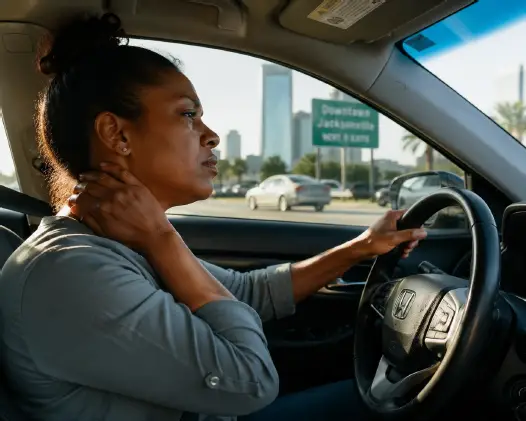
Who should you trust when your body is sending mixed signals? After a car accident or a sudden injury, your nervous system often goes into a state of "high alert." It’s a survival mechanism. Your brain wants to protect you from future harm, so it keeps the "fight or flight" switch turned on.
The problem is that when that switch stays on, your muscles stay tense, your cortisol levels skyrocket, and your body’s natural ability to heal itself slows down to a crawl. You might feel "jumpy," have trouble sleeping, or notice that your pain flares up whenever you have to drive past the spot where the accident happened.
This is the mind-body connection in action. Dr. Diesen often sees patients who have "mechanical" issues that are being made worse by "neurological" stress. If the brain is stuck in the moment of the crash, the body can’t fully relax into the healing process.
Enter EMDR: The Brain’s "Reset" Button
What exactly is EMDR? It stands for Eye Movement Desensitization and Reprocessing. It sounds like a mouthful, but the concept is actually quite simple and incredibly effective for our neighbors recovering from trauma.
Think of your brain like a giant filing cabinet. When something normal happens, like eating lunch, your brain files that memory away neatly. But when something traumatic happens, like a heavy impact on I-295, it’s like the "file" gets jammed in the drawer. It stays "live" and "active," causing your nervous system to react as if the wreck is still happening right now.
EMDR helps your brain finish filing that memory. By using guided eye movements or other rhythmic patterns, a trained professional like Lew Whiting, LCSW, helps your brain process the trauma so it moves from the "active" part of your mind to the "historical" part.
When that "file" is finally closed, the physical tension associated with it often vanishes. We see patients who finally experience a release in their neck and back muscles that months of standard treatment couldn't quite reach. It isn't magic; it’s just giving your brain the tools it needs to finish the job of healing.
How Hypnotherapy Helps You Find the "Off" Switch
Are you looking for a way to finally quiet the noise? Many people have a Hollywood version of hypnotherapy in their heads, someone swinging a pocket watch and making people cluck like chickens. In reality, clinical hypnotherapy is a state of deep, focused relaxation.
For someone recovering from a car accident, hypnotherapy is like a "software update" for the subconscious mind. While you are in a relaxed state, Lew Whiting can help you address the underlying anxiety or fear that might be tightening your muscles.
It is a powerful tool for:
Pain Management: Teaching your brain to "dial down" the volume on chronic pain signals.
Deep Relaxation: Breaking the cycle of muscle guarding that prevents chiropractic adjustments from "holding."
Reducing Anxiety: Helping you feel safe again, whether you’re behind the wheel or just trying to get a good night's sleep.
By combining the physical expertise of Dr. Diesen with the mental and emotional support of Lew Whiting, LCSW, we provide a "Team Approach" that addresses every angle of your recovery.

The Ortega Chiropractic Difference: A Neighborly Approach
What sets us apart from those big, faceless medical groups? It’s simple: we treat you like a neighbor because you are our neighbor. We know that navigating the aftermath of an auto accident is overwhelming. There’s insurance paperwork, car repairs, and the physical toll on your body.
We don't want you to be just another chart number. We want to see you back at the park, back at work, and back to enjoying your life without pain. That’s why we offer integrated care. When you come to see Dr. Diesen for an adjustment, we’re also looking at your overall well-being. If we notice that stress and trauma are holding back your physical progress, we have the resources, like counseling with Lew Whiting, right here to help you.
We believe in being accessible. You shouldn't have to jump through hoops to get the care you need. Whether it’s a quick question about your treatment or a concern about a new symptom, we pride ourselves on being reachable and responsive.
The Importance of the "2-Week Rule"
If you’ve been in a car wreck, time is of the essence. In the state of Florida, there are specific rules regarding your insurance benefits and how quickly you must seek medical attention. We call it the 2-Week Rule.
If you wait too long to see a professional, you might lose access to the benefits you've paid for, benefits that cover your chiropractic care, counseling, and recovery. Even if you think your "fender bender" wasn't that bad, the adrenaline can mask injuries for days or even weeks.
Don't wait until the pain becomes unbearable. Simply take action now. You can visit www.2weekrule.com for a complimentary evaluation to make sure you are on the right track and that your rights are protected.

Is EMDR or Hypnotherapy Right for You?
You might be wondering, "Do I really need this? I just have a sore back."
Ask yourself these questions:
Are you feeling more anxious or irritable since your accident?
Do you find yourself tensing up when you’re in a car?
Is your physical pain "plateauing", meaning it’s stopped getting better despite treatment?
Are you having trouble sleeping because your mind won't stop racing?
If you answered "yes" to any of these, your body might be holding onto the trauma of the event. Integrating EMDR or hypnotherapy into your recovery plan could be the "missing piece" that allows your physical body to finally let go of the pain.
Our team approach is designed to be seamless. Dr. Diesen and Lew Whiting work together to ensure that your physical adjustments and your emotional processing are supporting one another. When the mind is calm, the body heals faster. When the body is out of pain, the mind can relax. It’s a beautiful cycle of healing.
Take the Next Step Toward Recovery
Recovery shouldn't be a lonely journey. You don’t have to "just live with" the lingering effects of a car wreck. Whether it’s through a gentle chiropractic adjustment from Dr. Diesen or a transformative EMDR session with Lew Whiting, LCSW, we are here to help you get your life back.
It is simple to get started. You don’t need a complicated referral or a mountain of paperwork to talk to us. We offer same-day appointments because we know that when you’re in pain, you can’t wait.
Simply call us at (904) 425-4545 to schedule your visit. Let’s sit down, talk about what’s going on, and create a plan that addresses both your physical pain and the "invisible" side of your recovery.
We’re your neighbors, and we’re ready to help you heal: mind and body.
Ortega Chiropractic Clinic
904-425-4545
www.2weekrule.com
